

Blog Post Outline
- Introduction to Marinated Cucumber, Onion, and Tomato Salad
- What is a marinated salad?
- The cultural significance of salads.
- Evolution of marinated salads.
- Ingredients and Preparation
- Cucumbers: the crunch factor.
- Onions: the aromatic touch.
- Tomatoes: the juicy core.
- Dressing: the flavor enhancer.
- Health Benefits of Marinated Salad
- Nutrient-rich ingredients.
- Vitamins and minerals.
- Antioxidants.
- Hydration boost.
- Digestive aid.
- Nutrient-rich ingredients.
- Variations and Customizations
- Adding herbs and spices.
- Incorporating other vegetables.
- Experimenting with dressings.
- Vegan and gluten-free options.
- Cultural Significance and Serving Suggestions
- Regional preferences.
- Ideal occasions for serving.
- Pairing with other dishes.
- Presentation tips.
- Storage and Shelf Life
- Refrigeration guidelines.
- Preservation techniques.
- Reviving leftovers.
- Avoiding common pitfalls.
- Conclusion
- Summarizing the versatility and appeal of marinated salads.
- Encouraging experimentation and creativity in the kitchen.
Introduction to Marinated Cucumber, Onion, and Tomato Salad
Salads have long been cherished as culinary delights that tantalize the taste buds while offering a refreshing burst of flavors and textures. Among the myriad varieties of salads, the marinated cucumber, onion, and tomato salad stands out for its vibrant colors, zesty taste, and simplicity in preparation. In this article, we delve into the origins of marinated salads, explore the essential ingredients and preparation methods, uncover the health benefits, discuss customizable variations, reflect on cultural significance, offer serving suggestions, and provide tips for storage and shelf life.
Ingredients and Preparation
Cucumbers: the crunch factor
Cucumbers, with their high water content and crisp texture, form the backbone of this salad. Slicing them thinly ensures optimal absorption of the marinade, infusing each bite with a refreshing crunch reminiscent of a summer breeze.
Onions: the aromatic touch
Onions, whether red, white, or yellow, contribute a pungent yet pleasing aroma that complements the coolness of cucumbers and the sweetness of tomatoes. Sliced thinly or diced finely, they add a savory depth to the ensemble, elevating it from a simple side dish to a culinary masterpiece.
Tomatoes: the juicy core
Ripe, succulent tomatoes are essential for imparting a burst of juiciness and tanginess to the salad. Whether cherry, grape, or heirloom varieties, their vibrant hues and luscious flesh create a visual feast that entices both the eyes and the palate.
Dressing: the flavor enhancer
A well-crafted dressing is the key to transforming a medley of vegetables into a harmonious symphony of flavors. Typically comprising vinegar, oil, herbs, and seasonings, the dressing penetrates the ingredients, imbuing them with a tangy, savory, or slightly sweet essence that lingers long after the last bite.
Health Benefits of Marinated Salad
Nutrient-rich ingredients
- Vitamins and minerals: Cucumbers, onions, and tomatoes are rich sources of essential nutrients such as vitamin C, potassium, and folate.
- Antioxidants: The vibrant colors of these vegetables signify the presence of antioxidants, which combat oxidative stress and promote overall health.
Hydration boost
- With their high water content, cucumbers and tomatoes contribute to hydration, keeping you refreshed and energized throughout the day.
Digestive aid
- The fiber-rich nature of these vegetables aids digestion, promoting gut health and regularity.
Variations and Customizations
Adding herbs and spices
- Fresh herbs like basil, parsley, or dill add an aromatic dimension to the salad, while spices such as cumin or chili flakes impart a hint of heat and complexity.
Incorporating other vegetables
- Experiment with additional vegetables such as bell peppers, radishes, or avocado to add color, texture, and nutritional diversity to the salad.
Experimenting with dressings
- Swap out traditional vinaigrettes for creamy dressings like tzatziki or tahini for a Mediterranean twist, or go bold with a spicy sriracha-lime dressing for an Asian-inspired flavor profile.
Vegan and gluten-free options
- Opt for gluten-free tamari or coconut aminos instead of soy sauce in the dressing, and use maple syrup or agave nectar as a sweetener to accommodate dietary restrictions.
Cultural Significance and Serving Suggestions
Regional preferences
- In Mediterranean cuisine, marinated salads are often served as appetizers or accompaniments to grilled meats and seafood.
- In Southeast Asia, similar salads featuring cucumbers, onions, and tomatoes are popular street food snacks, offering a refreshing respite from the tropical heat.
Ideal occasions for serving
- Marinated salads are versatile enough to be enjoyed year-round, whether as a light lunch on a sweltering summer day or as a vibrant side dish at a holiday feast.
Pairing with other dishes
- Serve alongside grilled kebabs, falafel, or hummus for a Middle Eastern feast, or pair with tacos, quesadillas, or enchiladas for a Mexican-inspired fiesta.
Presentation tips
- Garnish the salad with a sprinkle of feta cheese, olives, or toasted nuts for added flavor and visual appeal, or arrange the ingredients in a rainbow pattern for an eye-catching display.
Storage and Shelf Life
Refrigeration guidelines
- Store the salad in an airtight container in the refrigerator for up to 3 days to maintain freshness and prevent spoilage.
Preservation techniques
- To prolong shelf life, marinate the vegetables without adding salt or acidic ingredients initially, and incorporate them just before serving to prevent wilting or sogginess.
Reviving leftovers
- If the salad becomes limp or loses its crunchiness, refresh it by soaking the vegetables in ice water for a few minutes before serving, or toss with additional dressing and fresh herbs for a flavor boost.
Avoiding common pitfalls
- Avoid marinating the salad for too long, as prolonged exposure to acidic ingredients can cause the vegetables to become mushy and the flavors to overpower one another.
Conclusion
In conclusion, the marinated cucumber, onion, and tomato salad epitomizes the beauty of simplicity in culinary artistry. With its vibrant colors, refreshing flavors, and versatility in customization, it has earned its place as a beloved dish across cultures and continents. Whether enjoyed as a light lunch, a refreshing side dish, or a vibrant appetizer, this salad never fails to delight the senses and nourish the body. So, next time you crave a taste of summer, reach for the ingredients to whip up a batch of this irresistible salad and let your creativity shine!
FAQs
- Can I substitute other vegetables in the salad?
- Absolutely! Feel free to experiment with your favorite vegetables to create a unique twist on the classic recipe. Some popular additions include bell peppers, radishes, and avocado.
- What type of vinegar is best for the dressing?
- While white wine vinegar or red wine vinegar are commonly used, you can also try apple cider vinegar for a slightly tangier flavor, or balsamic vinegar for a sweeter, more complex taste profile.
- Are marinated salads suitable for meal prep?
- Yes, marinated salads are excellent for meal prep as they can be made in advance and stored in the refrigerator for several days. Just be sure to add delicate ingredients like fresh herbs or avocado just before serving to maintain optimal freshness.
- Can I make a larger batch of dressing and store it separately?
- Absolutely! Making a larger batch of dressing and storing it separately allows for greater convenience and flexibility. Simply whisk together your desired quantities of vinegar, oil, herbs, and seasonings, and store the dressing in an airtight container in the refrigerator for up to a week.
- How can I adjust the flavor of the dressing to suit my taste preferences?
- Feel free to experiment with the proportions of vinegar, oil, herbs, and seasonings to achieve the desired balance of flavors. Add more vinegar for extra tanginess, or increase the amount of herbs and spices for a bolder flavor profile.
- Are marinated salads suitable for special dietary requirements?
- Yes, marinated salads can easily be adapted to accommodate various dietary needs. For example, you can use gluten-free tamari or coconut aminos instead of soy sauce in the dressing for a gluten-free option, or omit the cheese for a vegan version.
- What are some creative ways to serve marinated salads?
- Marinated salads can be served in a variety of creative ways, such as stuffed into pita pockets for a portable lunch, layered onto crostini for a sophisticated appetizer, or tossed with cooked pasta for a refreshing pasta salad.
- Can I add protein to the salad to make it more filling?
- Absolutely! Adding protein-rich ingredients like grilled chicken, tofu, chickpeas, or quinoa can turn a simple salad into a satisfying meal. Just be sure to adjust the seasonings and dressing accordingly to complement the additional ingredients.
- How can I prevent the salad from becoming watery?
- To prevent the salad from becoming watery, be sure to thoroughly drain the cucumbers after slicing them, and use ripe, firm tomatoes with minimal seeds and excess moisture. Additionally, avoid overdressing the salad, as excess dressing can cause the vegetables to release water over time.
- Can I make a marinated salad without oil?
- While oil is typically used in the dressing to enhance the flavor and texture of the salad, you can certainly omit it if desired. Simply increase the amount of vinegar or citrus juice in the dressing to compensate for the lack of oil, and adjust the seasonings accordingly to maintain balance.
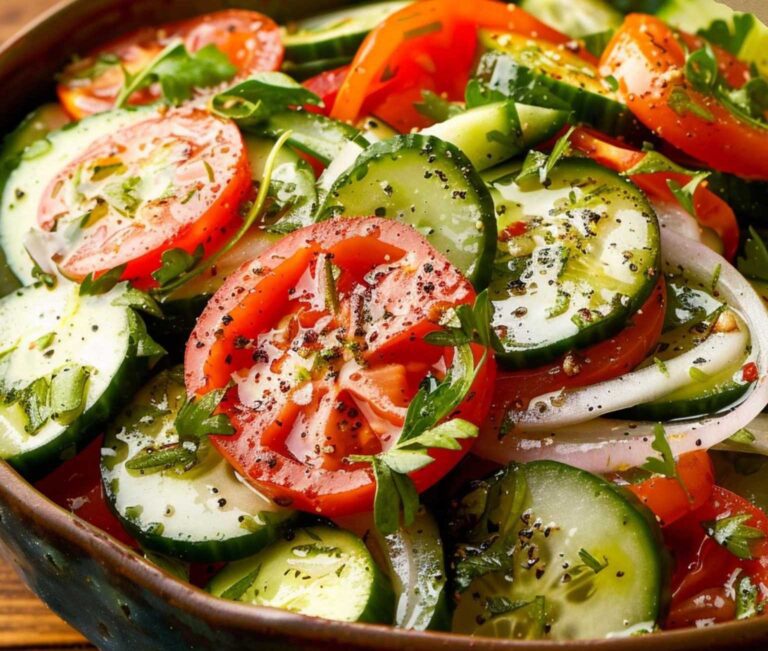
Marinated Cucumber, Onion, and Tomato Salad
Ingredients
Instructions
- Author: Chloe